Ir al contenido principal

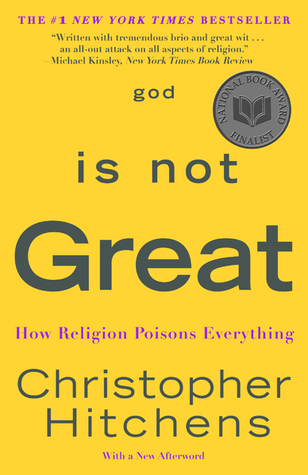
God Is Not Great: How Religion Poisons Everything


God Is Not Great: How Religion Poisons Everything

Christopher Hitchens
Religion has run out of justifications. Thanks to the telescope and the microscope, it no longer offers an explanation of anything important. Where once it used to be able, by its total command of a worldview, to prevent the emergence of rivals, it can now only impede or retard -or try to turn back- the measurable advances that we have made.
Philosophy begins where religion ends, just as by analogy chemistry begins where alchemy runs out, and astronomy takes the place of astrology.
...religion was spread not by example but as an auxiliary to the more old-fashioned methods of holy war and imperialism.

Comentarios

Entradas populares de este blog

Gaza, cuna de mártires

  Gaza, cuna de mártires Mikel Ayestarán Los efectos de la guerra son incomparables a los dos lados de la verja; cualquier intento de igualar a los dos bandos supone una manipulación de un conflicto totalmente desproporcionado.  

The Smartphone Society: Technology, Power, and Resistance in the New Gilded Age

  The Smartphone Society: Technology, Power, and Resistance in the New Gilded Age Nicole Aschoff We can and should tell our own stories about the kind of society we want to live in, technology and all. In doing so, we can foster new ways of thinking about our digital-analog future. But what stories should we tell? How do we deal with the myriad issues raised by our smartphones? - privacy, autonomy, addiction, surveillance, precarity, narcissism, commodification, democracy. A growing number of voices are weighing in on these questions, which is a good thing because, unlike the techno-determinists who until recently have received a disproportionate amount of airtime, it assumes that we can do something. If our future is not to be Silicon Valley´s Dis-Utopia then what is it to be? What is our version of Utopia? Or a more manageable question, What relationship should we have with the technology and corporations that have, largely through our smartphones, come to play a central role in ...

El capital en el siglo XXI

El capital en el siglo XXI Thomas Piketty   El impuesto progresivo sobre el patrimonio individual es una institución que permite al interés general retomar el control del capitalismo, apoyándose en las fuerzas de la propiedad privada y la competencia. Si es el caso, la progresión del impuesto puede ser intensa para las fortunas más grandes, y esto puede hacerse en el marco del Estado de derecho, tras un debate democrático. Es la respuesta más idónea a la desigualdad r>g y a la desigualdad del rendimiento en función del capital inicial.   Leído en 2022